Welcome to Booklifenow.com! (Sign Our “Guestbook”)

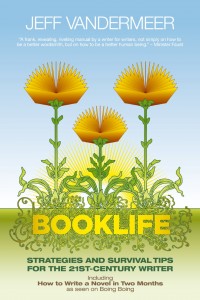
Welcome to Booklifenow.com, a site that serves as support for and a supplement to my new book Booklife: Strategies and Survival Tips for the 21st-Century Writer.

Read the rest of this entry »

Just One Sentence at a Time: Brandvold, Monahan, & Piccirilli on Writing Full-time

Today’s round-up includes three very different writers: Peter Brandvold, Sherry Monahan, and Tom Piccirilli.  Each of them writes full-time, whether fiction or non-fiction.  Each lives life contract to contract, deadline to deadline, sentence to sentence. 

Peter Brandvold writes under his own name and his pen name, Frank Leslie.  His recent books include The Devil’s Winchester (as Peter Brandvold), Bullet for a Halfbreed (as Frank Leslie) and Longarm and the Crossfire Girl (as Tabor Evans).  Under any name or in any series, Brandvold is known for writing violent action particularly well.  His secret seems to be his great care in developing life-like characters.

Sherry Monahan is a freelance writer, editor, and genealogist who specializes in the Victorian Western migration.  She is a contributing editor at True West magazine, as well as the author of the recent Cary, NC and the forthcoming E.M.H.: The Aristocratic Ranch Wife.  In addition to freelance writing and editing, Monahan hires out as a professional researcher who helps people not only trace their ancestry but to also flesh out the details.
Read the rest of this entry »

Against Story

What do people want? “A good story.” How do we know? People can barely say anything else. When editors describe the sort of material they’re looking to acquire, they want “a good story.” Readers are always on the hunt for “a good story.” Good stories are also useful for shutting down a variety of discussions. Are there not enough women being published, or people of color? Who cares who the author is, so long as he or she writes a good story? Can writers do different things with their stories—create new points of view, structure words on the page differently, work to achieve certain effects not easily accessible with more common presentations? Why bother—a good story is the only important thing.

Now, when some people talk about a good story they mean a good reading experience. A good reading experience doesn’t necessarily involve a story at all. But many people, when they say a good story, mean a good plot, and want all the other elements of fiction subsumed to the plot. And not just any old plot, but the plot as detailed in the famous triangle of that old anti-Semite Gustav Freytag. (The anti-Semitism is why he’s pretty much known for his geometry rather than his creative writing, these days.) Rising action caused by a sequence of attempts and failures, while concurrently a set of revelations slowly illuminate the original cause of the dramatic action. Then there’s a climax, and a brief unwinding of the emotional tension caused by the conflict’s resolution.
Read the rest of this entry »

Against Craft

Writing is often described as a craft, and usually in counterposition to art. In the Romantic Era, art was seen as the precinct of special, sensitive people, who were inspired by a Muse. Craft, on the other hand, involved practice, tradition, and the perfection of skills. Today, professional writers are almost a single mind—writing is a craft, not an art.

There are a few good reasons to ally with craft. Writing is hard work, and revision thankless. Yet, plenty of non-writers just imagine writers “being creative” and generating stories. Then the money flows on in. Writing skills can be learned, though mostly just by reading widely, and so it has a lot in common with other crafts. Practice makes…improvement. (Not perfect.) Then there’s the publishing aspect. Writers take assignments, write to certain themes or lengths, and many pride themselves on their ability to write anything.
Read the rest of this entry »

Against Professionalism


Behaving in a professional manner, for writers, is really quite easy. Professional behavior basically means writing publishable work, meeting deadlines, not plagiarizing, and not libeling anyone with one’s work. The problem with discussions of professional behavior is that this brief list really is pretty much it, and if one is not yet writing publishable work then none of the rest matters. Well, that’s no way to become a publishing guru, or to sell aspiring writers all sorts of goods and services! And so was born “professionalism” which is running especially rampant in the field of science fiction and fantasy.

Professionalism is a complex of supposedly mandatory and proscribed behaviors that makes a writer “professional” regardless of their ability to write interesting material. Recently, at a science fiction convention I met a former student of mine, and he was very concerned about…his blog. Which he does not have. He was told, however, that today professional writers must all blog, but that these blogs must not offer up controversial political opinions, or negative reviews of popular books, or “ruffle feathers.” Everything must be “politically correct” he believed—to use that famously meaningless term I try so hard to get my students to stop using. I’d told the class Ronald Sukenick’s famous dictum, Use your imagination, or someone else will use it for you over and over.  Maybe one day it’ll stick. So, what to blog about? he wondered. What does a professional blog look like, and how does it lead to publishing deals? I recommended that he concentrate on finishing his book first, and making sure it was as good as it could be.
Read the rest of this entry »

Raising the Freak Flag with Guest Nick Mamatas

Welcome to Nick Mamatas, who will be guest posting this week here at Booklife.

Mamatas has been freelance writing and editing for little over a decade now.  His experiences have been, to say the least, varied.  In fact, his CV reads like a cut-and-paste from 12 different writer’s bibliographies.  His list of credits is all over the map.

On his blog, in his essays, and especially in his new book, Starve Better: Surviving the Endless Horror of the Writing Life, Mamatas writes with wit, honesty, and openness.  Even when he’s getting himself into to trouble, he’s wide open and funny about it.  (Or maybe that’s part of the reason why he’s getting in trouble?)

Sometimes I don’t agree with Mamatas, but I keep reading–whether to see what he’ll say next, to be convinced by what he has to say, or to find out how he’s going to get himself out of this one!
Read the rest of this entry »

To Never Give Up: Cotton Smith on Writing the West

Cotton Smith is as concerned with the interior landscape of his characters as he is with the exterior landscape of the West.  And horses.  He loves horses, and that affection shows throughout his excellent novels of Western adventure.

Smith is a historian, artist, and writer of both fiction and non-fiction.  His novels include Spirit Rider, Return of the Spirit Rider, Blood of Bass Tillman, Death Mask and last year’s Ride for Rule Cordell

Whether writing about Texas Rangers, farm boys, or outlaws, Smith gives readers a look inside the hearts and minds of the people who face hardships day in and day out.  When Smith writes about a range war, shoot-out, or cattle drive, readers are reminded that character and plot are inextricably linked–that plot grows out of character and character grows through plot.

“I am fascinated by the power of the human spirit,” said Smith, “the ability to take blows and grow beyond them.   To never give up.   Everyone gets knocked down; how one reacts to that is the key to success.  This challenge to life is enhanced, in my opinion, in dealing with the rawness – and greatness — of the American West.”
Read the rest of this entry »

The Beauty & the Terror: Jory Sherman on Writing the West

Jory Sherman started out as a poet. Half a century later, he is a legend known for taking readers on heroic journeys across the West.

Sherman is the author of more than 400 books, including the recent novel The Amarillo Trail (as by Ralph Compton), which came out today.  Death Rattle and Savage Vengeance are due out later this summer.

I’ll hold off on talking about his excellent new book on writing, Master Course in Writing (High Hill Press).  I want to save Master Course for a full-length review.  Suffice it to say that Sherman is a highly respected teacher known for changing whole careers with a bit of well-timed advice or gentle wisdom.  And in Master Course he lays it all out in a straightforward and compelling writing “course”.

Though Sherman is legally blind, his vision of the writing process has never been clearer, never sharper. He is at the top of his craft.  His prose, whether non-fiction or fiction, has never been fiercer, has never been more elegant than it is today.  So, grab a seat at the master’s knee and listen up while Sherman talks about writing fiction in general and the western in particular.
Read the rest of this entry »

The Cadence of an Up-tempo Ballad: Mike Blakely on Writing the West

Mike Blakely writes and sings cowboy songs.  He’s recorded 11 albums of TexAmericana music, including the recent Homemade Serenade and  Live From Luckenbach (with Thomas Michael Riley).  Blakely plays somewhere in the neighborhood of 150 gigs a year, sometimes alone, sometimes with Michael Riley, and sometimes with his father, Doc Blakely, the well-known humorist.

Blakely also writes cowboy books.  He’s the author of 16 novels, including A Tale Out of Luck, which was co-written with Willie Nelson.  Three of Blakely’s novels, Moon Medicine, Comanche Moon, and Shortgrass Song, were nominated for the Western Writers of America Spur Award for Best Western Novel.  The novel Summer of Pearls won a Spur and so did his song, “The Last Wild White Buffalo.”  He’s currently working on a novel with country music legend Kenny Rogers.

Blakely grew up in “ranching and cowboying” in Texas.  His songs and novels are filled with quirky characters that reflect the vast Texas landscape.  On stage or in print, Blakely has a way of letting a song or story unfold in its own time, on its own terms.  Below, Blakely and I talk about learning from his father, setting out on his own, and getting back up after being knocked down.
Read the rest of this entry »

An Honorable Man in a Mostly Dishonorable Land: Robert J. Randisi on Writing the West

Robert J. Randisi has written at least 13 novels a year—every year—since 1982.  The tally so far is somewhere over 550.  That number wouldn’t be as impressive if not for the fact that they are all good.

Okay, I haven’t read all of his books.  (“No one has,” Randisi once told me, “not even me.”)  But I’ve read a lot of them, as many as I can get my hands on, and I’ve enjoyed every last one of them.  In fact, I have to be careful with a Randisi novel.  If I start it, I will finish it in as few sitting as possible and that can be problematic if I have things like papers to grade, deadlines to meet, or… sleep to get.

What’s the shortest distance between reality and another world, another place and time?  Simple.  Page one of a Randisi novel.

Most of Randisi’s novels have appeared in The Gunsmith action-western series (formerly adult Western series) under the name J. R. Roberts.  (The Gunsmith #353: The Deadly Chest came out this month.)  Randisi has written in just about every form and every genre—from action-adventure to science fiction to erotica–but he is best known for writing private eye fiction and Westerns.  The sixth book in his Rat Pack Mysteries series, Fly Me to the Morgue, comes out this June, and a new The Gunsmith novel comes out each month with one Giant Gunsmith each fall.

Below, Randisi and I talk about writing, getting knocked down and getting back up, and about always moving forward but looking back every now and then.
Read the rest of this entry »

In Constant Conflict: A Fistful of Legends

“The West,” says Raymond Foster below, “is full of legends.”

And so is the Western.

A legend is both a tale from the past–a time polished mixture of truth and myth–and the hero (or heel, as C. Courtney Joyner points out) featured in that tale.  There is the story with all its elements and there is the character with a story.  And there’s time between then and now.

Below, eight of the contributors to A Fistful of Legends edited by Nik Morton and Charles T. Whipple talk mostly about the legend as the character—what is the stuff of legends and what goes into the creation of a legendary character in Western fiction.
Read the rest of this entry »