There’s been a lot of discussion about fiction by women, special issues of fiction by women, feminist criticism, and possible disparities in the number of submissions by men versus women.
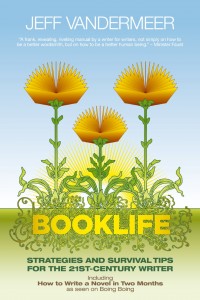
It may seem like a tangent, but I think portions of this section of Booklife pertaining to the support of your partner or friends are relevant to the conversation. So here’s your Monday post, two days early… – Jeff
Writing is a solitary activity, but you need to have some kind of moral support or it can become a lonely activity. I’m lucky in that my wife Ann is my partner in editing projects, my first reader for books, and loves my work — yet she still has the distance to give me honest feedback. Because she isn’t also a fiction writer, there’s no tension between rival careers, the kind of dynamic that’s especially destructive when one writer’s career is going strong and the other’s is entering a decaying orbit.
But support comes in many forms. It might come from friends and family instead, whether or not you’re in a committed relationship. It might be less proactive, as in the case of a partner who believes in your effort and helps you find time for it. In one case, a friend’s husband supported her for over fifteen years, believing in her even if he didn’t always care for her work. One day, after hundreds of rejections, she not only got a book deal, she won a literary award with a huge cash prize, received offers for publication in foreign language editions, and now provides most of the income for their family. Without her husband’s belief in her, she might never have gotten to that point.
Only one situation is intolerable for the health of your Private Booklife: to have a partner who either passive-aggressively or actively doesn’t support you — doesn’t support you or the work. I know several people in relationships like that and, inevitably, if the person is serious about pursuing their goals, they find someone else to support them emotionally (or they quit writing). In a sense, they have an emotional affair with another person — someone who better appreciates their writing and their goals.
In his book Word Work, award-winning writer Bruce Holland Rogers has done a great job of identifying the six main areas in which a partnership can hurt or help a writer: Identity, Work Habits, Play Habits, Audience, Blame, and Gender Roles. I haven’t found any better description of the dynamics of support in a relationship between a writer and his or her partner. Here’s a summary of his analysis of these six areas:
Identity. A partner can either help confirm or deny your identity as a writer. A partner who tends to agree with the view of the wider world that your dream is futile or impractical (or, worse, ridiculous) helps to erode your identity as a writer. A partner who confirms that identity helps you to create a separate reality in which you are a writer. This also creates a positive space in the home for your writing.
Work Habits. Your partner should be respectful of your personal space — not, for example, forever tidying piles of material that may look like a mess but constitute the organic progress of a book for some people. In addition, you may have odd habits, like stopping in mid-sentence to write down a sudden idea or image. Ideally your partner will try to understand this behavior and not take it personally or think of it as rudeness. It’s an essential part of many writers’ process. (Nor, however, should you feign a certain amount of eccentricity to get out of responsibilities.)
Play Habits. A vital element of stimulating the imagination is play, which means writers can be pretty silly sometimes. A partner who doesn’t engage in reciprocal play with you may actually be stifling your ability to recharge your imaginative batteries. At the very least, reacting negatively to a playful situation will make it harder for you to be creative over time — especially if that sense of play involves sex.
Audience. You must be understanding of partners who do not want the role of reading and responding to your work. Although there’s a great temptation to want your partner to be your first reader, not all people are suited to this job. Don’t force the issue, especially in a situation where the partner is otherwise supportive.
Blame. You shouldn’t blame your own creative frustration on your partner. Partners often sacrifice as much as the writer for the writer to have the space and time to be creative. Blaming your partner for your problems isn’t just wrong, it’s unjust.
Gender Roles. Your relationship with a partner should acknowledge the unique stressors pursuing a creative dream can put on the division of labor in a household. Unfortunately, many homes still assign certain roles to women and other roles to men. Male writers in particular can unwittingly take advantage of that traditional division of labor to find time to be creative at the expense of their partner’s time and effort. Without a frank discussion of roles within the household, and finding a realistic balance that benefits both parties, someone will eventually be simmering with resentment, and communication will deteriorate. As one female writer who wished to remain anonymous put it in an email to me: “[The significance of sacrifice is] wrapped up for me in the stress/struggle I have as a female writer, on the losing end of gender expectations. There a number of things I always felt like I should do: cook healthy meals, exercise, keep the house clean for me and my significant other, remember my friends’ and family’s birthdays, be there for my five younger siblings whenever they need me, etc. Yet I’m constantly aware of the fact that all the time I spend on those good things is time that I’m not writing. I constantly feel guilty — either guilty because I’m not writing, or guilty because I’m not keeping up with the tasks mentioned above. I think women are probably more prone to that feeling of guilt and personal failing than men, though perhaps that’s just a stereotype.”
This last issue, of gender roles, speaks to another issue, as well: the value of self-sufficiency. No matter how much support you receive, there’s something solitary at the heart of being a writer, and you alone are responsible for making the decisions that nurture and support your creative life. There can be a liberating quality in recognizing this fact. As Tessa Kum puts it, “I’m flying solo in every sense of the word. No one does the dishes. No one requires my time. No one tells me what I can and can’t do. Every good and great and kind thing a partner might do for me, I do for myself. Every harsh and horrible and crippling thing a partner might do for me, I do for myself.”
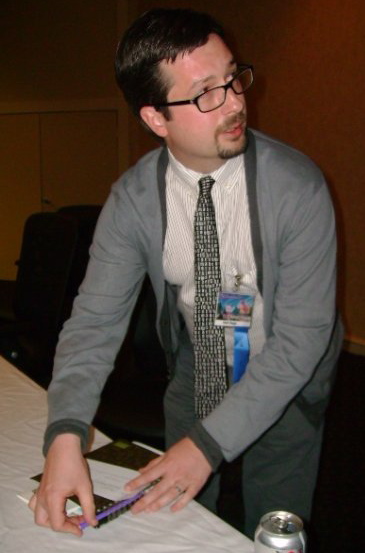 Matt Staggs is a literary publicist and the proprietor of Deep Eight LLC, a boutique publicity agency utilizing the best publicity practices from the worlds of traditional media and evolving social technologies. He has worked in the fields of public relations and journalism for almost a decade. In addition to his work as a publicist, Matt is a book reviewer and writer whose work appears in both print and web publications.