Discuss this: Fewer young people reading, and what it means for the future.

A recent report from the Kaiser Family Foundation reveals some interesting observations about reading trends among children. According to Publishers Weekly, the study indicates that while young people age eight to 18 are spending less time with printed material overall, and the number of those who describe them as “readers” overall has fallen, about the same percentage of those surveyed identify themselves as book readers, and they are spend slightly more time reading than young people did in 1999.  The study also shows that young people are consuming digital media at a higher rate than ever, and also that more of them own their own cell phones and digital devices.

What does this say about the future? Will these increasingly digitally adept young people—those that love books and love reading—carry their love for reading into adulthood? Will the next wave of adult consumers expect to receive and experience their books in a digital format as a matter of course?

What about the decrease in young people who identify themselves as readers? With fewer of them reading than ever, what will the authors and publishing industry of tomorrow need to do to stay both solvent and culturally viable? Will emerging forms of digital entertainment and education become a new source of employment for writers and other content providers? What will this mean for the printed book?

Let’s discuss this today, you and I. Leave your thoughts in the comments section below.
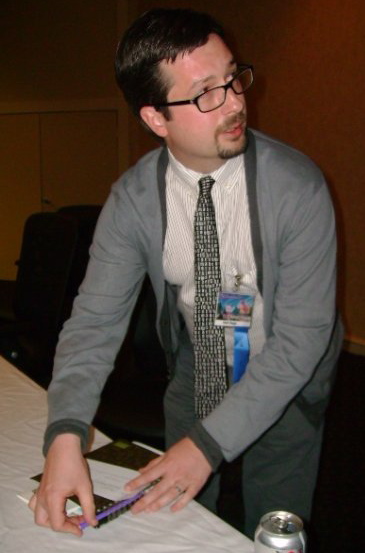
n653213921_1671825_1056996Matt Staggs is a literary publicist and the proprietor of Deep Eight LLC, a boutique publicity agency utilizing the best publicity practices from the worlds of traditional media and evolving social technologies. He has worked in the fields of public relations and journalism for almost a decade. In addition to his work as a publicist, Matt is a book reviewer and writer whose work appears in both print and web publications.

Friday’s Links: Whitewashing, Working Writers and the Great Chain of Rejection

Take a look behind the scenes at the process responsible for making James Patterson one of the best-selling authors in America.

Alarmed by rampant reports of internet book piracy, author Tess Gerritsen writes about what she found when she went looking for her own books online.

Working writers: when do you know it’s time to quit your day job?

The Huffington Post shares photos of some of the world’s most amazing libraries.

Carolyn Kellogg covers Bloomsbury USA’s second “whitewashing” incident, wherein a white character is placed on the cover of a book about a dark-skinned character.

Publishers try to protect e-book prices from Apple, Amazon.

Received a rejection letter? Take heart! You’re a part of a great chain of rejection.

Kelly Burdick examines the implications of the New York Times paywall.

Richard MacManus suggests several tools for monitoring topics online.

Shedding some light on foreign rights.

n653213921_1671825_1056996Matt Staggs is a literary publicist and the proprietor of Deep Eight LLC, a boutique publicity agency utilizing the best publicity practices from the worlds of traditional media and evolving social technologies. He has worked in the fields of public relations and journalism for almost a decade. In addition to his work as a publicist, Matt is a book reviewer and writer whose work appears in both print and web publications.

Book tours, traditional and otherwise: are they for you?

In an essay for the New York Times, author Stephen Elliot wrote about his decision to eschew the traditional book tour model in favor of scheduling readings in the private homes of his fans. Elliot went where he was invited, reading in living rooms across the United States and depending on his hosts for overnight lodging. Overall, Elliot managed to sell over a thousand books on his tour and generate significant publicity along the way.

Elliot is an established author with seven published books and the founder of the popular culture and literary website The Rumpus. While Elliot’s D.I.Y. book tour seems to have been a resounding success, would such a strategy work for other, less successful writers?

Lauren Cerand, an independent public relations representative and consultant in New York, thinks that lesser-known authors could definitely benefit from such an approach.

“Absolutely,” said Cerand. “Technology may have created new opportunities for authors who previously would not have been a high priority for their publishers in terms of promotion, but it has also made it more imperative than ever to know –– and reach –– your readers.”

Rusty Shelton of Phenix & Phenix Publicity liked Elliot’s approach, but feels that a book tour isn’t always the right way to go.

“I love the creativity behind Stephen Elliott’s book tour but I’m not sure I’d suggest it for every author. Book tours are really on the way out and we’re finding that the only way to make them work is to go after nontraditional venues – with nontraditional events,” said Shelton. “In other words, as Elliott notes in his piece, most bookstore signings (outside of an author’s local market or a market where they have a strong network) for authors that aren’t extremely famous are sparsely attended and a bit depressing.”

However, Shelton did say that efforts like these can result in a lot of publicity. This could potentially pay off in the long run by reaching more readers.

“Few publishers are shelling out for travel expenses on book tours anymore – frankly, I’m surprised Elliott’s publisher was willing to pay for travel, especially when most of the sales are wholesale as opposed to trackable retail sales. When you look at overall sales vs. expenses, I doubt the tour paid for itself. That said, Elliott made the most of out his tour with promotion. This NYT piece is huge for him and assuming his publicist went after local media in each market he visited, he likely received PR for his book he wouldn’t have snagged without a local tie-in.”

Cerand said that book tours and other public events should be coordinated with retailers in order to maximize effectiveness.  “I would recommend hooking up with a local bookseller or chain branch to make sure your sales register, and to expand the buzz.”

CONTINUED

Continue reading

You Are Not a Gadget…Or, at Least, You Shouldn’t Be

One of Matt Staggs’ links last week was to a New York Times Book Review piece on Jaron Lanier’s book You Are Not a Gadget. I haven’t read the book, but the description of its main points really resonated with me, especially because I’m currently taking a break from Facebook and my personal blog.

This part of the review made perfect sense to me:

Mr. Lanier, a pioneer in the development of virtual reality and a Silicon Valley veteran, is hardly a Luddite, as some of his critics have suggested. Rather he is a digital-world insider who wants to make the case for “a new digital humanism” before software engineers’ design decisions, which he says fundamentally shape users’ behavior, become “frozen into place by a process known as lock-in.” Just as decisions about the dimensions of railroad tracks determined the size and velocity of trains for decades to come, he argues, so choices made about software design now may yield “defining, unchangeable rules” for generations to come.

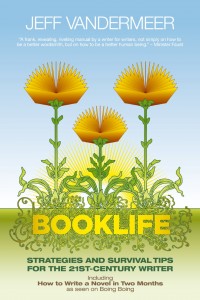
This argument and others from his book mirror my own concerns about new media. Even as I’ve embraced much of what new/social media has to offer, I also strongly recommend, in Booklife and in my lecture for MIT, thinking about what you’re doing and remembering the importance of balance. In particular, these points:

(1) New media tools like Facebook and Twitter are exactly that—tools. They are not strategies. Just getting on Facebook, creating a blog is not a strategy or a plan. I can’t repeat that enough.

(2) It’s when you mistake the tools for a strategy that you begin to not only become tactical and reactive but also limited in your thinking because of the limitations of the tools.

(3) The most successful writers in the future will be the ones that stop responding in Pavlovian fashion to our current need for that little food pellet in the form of a response to a Blog entry, Twitter line or a Facebook status message.

(4) Further, the tools which you help realize both a creative project and create interest for it are constantly changing. Thus a focus on the tools is a focus on what will all too soon be the past.

(5) A focus on tools thus also means that you are in some ways limiting your options by letting the limitations of the tool and the preconceptions the tool engenders shape your project. Don’t let your imagination become a lackey to a new media tool. If a tool controls your actions, it to some extent controls your imagination.

Lanier’s book also seems to make strong arguments about not supporting mob behavior on the internet, something that we’ve seen too often—in which sheer force of numbers seems to win an argument, even when there hasn’t been true or logical discussion of the issues. Nuance suffers and the facts tend to become distorted.

Food for thought–and a book I’ll be picking up shortly. Amazon has an interesting interview with the author here.