E-Books and Issues of Entitlement

By now, it’s unlikely you haven’t heard of the dispute between Amazon and Macmillan. That dispute and its resolution is important, but a larger issue has come to light: namely the sense of entitlement some readers have with regard to getting e-books dirt-cheap. Part and parcel of this attitude is a basic misunderstanding of the breakdown of costs associated with publishing a book.

For example, one of the biggest faux bits of logic I’ve been seeing is that “If the mass market paperback is $7.99, why can’t I get the e-book version from the get-go at that price?” Well, the fact is $7.99 for mass market paperbacks only works if you’re printing tons of books. It’s also important to note that many authors never get their books published in mass market format because the publishers rightly have estimated that based on hardcover and trade paperback sales, that particular book won’t sell enough copies in mass market. So they don’t reach the $7.99-a-book threshold, which includes the print-a-crapload-of-copies threshold.

Other examples show a basic misunderstanding of distribution, or of the fact that the actual physical printing of a book is a fraction of the cost of producing a book.

But what I find most inexplicable is the level of venom directed by some readers at publishers, and by extension writers, like some kind of scam is being perpetrated upon them. It’s especially ironic given that the book industry is usually dealing in unit sales of an individual book of under 20,000 copies, whereas other forms of entertainment like movies and music are dealing in unit sales of over 100,000 copies. In other words, there’s not much room for price discounts.

What’s led to this sense of entitlement? Here are some possible factors, beyond the basic fact of there being lots of free content on the internet.

—The proliferation of free book downloads offered by publishers and writers.

—The constant attacks on copyright, and thus the overall idea of “ownership”, on highprofile blogging platforms and websites.

—General attacks on software limiting a user’s ability to copy an e-book, especially attacks that don’t do so in the context of respect for the creator’s wishes or need to make money from their work.

—Deep discount pricing of e-books by entities like Amazon to encourage the sale of e-books.

—Google’s book scanning project, which, under the guise of “fair use”, has made significant portions of hundreds of thousands of books available online with no regard for the rights of the writers of those books.

Have these factors led to this sense of entitlement? I don’t know, but it’s worth thinking about. It’s also worth noting that we often cause problems for ourselves as authors by thoughtlessly adopting whatever hot new media idea pops up on the internet. In some cases, I think we begin to contribute to our own disenfranchisement in doing so.

If this sense of reader entitlement proves to be pervasive or becomes the norm, then writers will be in a tough position, and the only way to make money on e-books will be to retain the rights yourself and self-publish–meaning you will also have to become your own editor, your own typesetter, your own distributor, etc.

Although you can self-publish more easily today than in the past, it’s not going to help you that much unless you are a celebrity like Wil Wheaton, someone with an existing high-profile platform like John Scalzi or Cory Doctorow, someone who is already a bestselling author, or unless you are prepared to basically become your own publishing house (involving a series of skillsets that most people don’t have).

In such a scenario, if e-books do eventually dominate the marketplace and physical books have only a fraction of their current market share, it’s entirely possible that unless this situation resolves itself into a compromise whereby readers actually show respect for the creators of the stories they love that we will see one of the largest mass extinctions of published writers in the history of literature. They’ll still be writing–but they’ll be largely invisible, and also unable to even dream of writing full-time.

My feeling is that it won’t get that bad, but we as writers have to do our best to make sure it doesn’t–by educating readers and doing our part as writers to make sure that our actions don’t contribute to the problem.

(For the best series of posts on the subject, including the Amazon-Macmillan fracas, visit Jay Lake’s livejournal.)
Time, Will, and Ganging Aft Agley: Part 2

If you want to write, you’ll find the time, whether you have a day job or not.  Time is not the issue: the will to write is the issue.  The ability to will yourself to write is enhanced when you have a schedule.

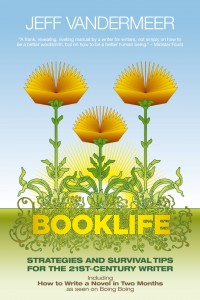
–Jeff VanderMeer, Booklife


This essay began last week with a discussion of my New Year’s writing plan and how it has gone a little bit awry. 

Many of the books I read are in the 200 page range, whether literary, popular, mainstream, western, crime, whatever.  I have loved that length since I was a kid.  There is just something about a paperback that actually fits in the back pocket of your jeans.  There is great satisfaction in reading a whole book in one sitting.  That way I get the full effect, feel the power of the whole and not just a chapter or two. 

I remember, fondly, the men’s adventure and western glut of the 1980s and return there often.  No one can deny me the thrill of a Conan pastiche.  Jim Thompson, Charles Williams, and Charles Willeford.  Chester Himes.  Good things come in 200-page-packages.

But it was John Steinbeck who showed me the full power of the short novel.  The Pearl nearly burst my lungs under water and Of Mice and Men put a bullet in the back of my head.  When Carlson takes Candy’s dog out to put him down, I wept.  A fifteen year old boy and I wept openly.  For the dog, for Candy staring at the ceiling, for a world where dogs get old and have to be put down. 

Steinbeck’s books tear my heart out.  His much longer masterwork, The Grapes of Wrath, simultaneously inspired me to write and nearly crushed me with despair.  How could anyone write so well?  How could anyone tap so thoroughly into the power of fiction?

How could anyone have such a powerful will to write, and accomplish so much beauty with that will?

I love Steinbeck’s writing, fiction and non-fiction alike, for many reasons.  His gristly prose is almost always compassionate.  He seems to have found a way to be brief without sacrificing heart unlike, say, Hemingway who occasionally cuts too close to the bone.

In Working Days: the Journals of The Grapes of Wrath, Steinbeck says, “My whole work drive has been aimed at making people understand each other.” 

That’s it.  That’s the biggie.  Making people understand each other.  Translating your will to write into story and bringing people together.

I picked up Working Days with an eye toward using it in a literature class and toward getting a behind the scenes look into one of the Great American Novels.  Instead, what I found was the journal of a writer writing a book despite corrosive self-doubt and the other distractions of everyday life. 

Also, I found a slim little book that serves as a very fine companion to Booklife.

Here are some excerpts from Working Days that will be of interest to readers of Booklife:

From Entry #2 (May 31, 1938):  “Just now the work goes well.  It is nearly the first of June.  That means I have seven months to do this book and I should like to take them but I imagine five will be the limit.”

From Entry #11 (June 10, 1938):  “This must be a good book.  It simply must.  I haven’t any choice.  It must be far and away the best thing I have ever attempted—slow but sure, piling detail on detail until a picture and an experience emerge.  Until the whole throbbing thing emerges.”

From Entry #13 (June 13, 1938):  “The failure of will even for one day has a devastating effect on the whole, far more important than just the loss of time and wordage.  The whole physical basis of the novel is discipline of the writer, if his material, of the language.  And sadly enough, if any of the discipline is gone, all of it suffers.”

From Entry #15 (June 15, 1938):  “Not an early start today but it doesn’t matter at all because the unity feeling is back.  That is the fine thing.  That makes it easy and fun to work.”

From Entry #18 (June 18, 1938):  “This is a huge job.  Mustn’t think of its largeness but only of the little picture while I am working.  Leave the large picture for planning time.”

From Entry #30 (July 6, 1938):  “Make the people live.  Make them live.  But my people must be more than people.  They must be an over-essence of people.”

From Entry #31 (July 7, 1938):  “The confidence is on me again.  I can feel it.  It’s stopping work that does the damage.”

From Entry #35 (July 13, 1938):  “Took four days when Book One was done…  Routine of the house more important… Having to work through and around a thousand things anyway.  Wish I could run away from everything to do my book.”

From Entry #40 (July 20, 1938):  “The work must go on day after day until one day it will be finished.”

From Entry # 42 (July 22, 1938):  “I’m taking my time now but the wordage continues.  That’s the way it should be, too….  If my self-discipline will let me go on working while hell pops around my ears, I’ll be all right.  I’ll know I am all right.  I just hope the work isn’t suffering.  And now to it….”

From Entry #52 (August 16, 1938):  “It is just too much.  Too much.  I feel like letting everything go.  But I won’t.  I’ll go and I’ll finish this book.  I have to.  My whole damned life is tied up…  My many weaknesses are beginning to show their heads.  I simply must get this thing out of my system.  I’m not a writer.  I’ve been fooling myself and other people.  I wish I were

I’ll leave off there.  We all know how it turns out, anyway.  The Grapes of Wrath is, indeed, a great book.  Its success changed Steinbeck’s life and writing.  It changed a lot of lives and continues to with each new reader and reading. 

The entries quoted above are just a taste of Working Days.  I don’t want to ruin the journal for you if you’re going to read it.  And I strongly recommend that you do read it, especially if you work in the longer forms and find yourself wrestling with your writing schedule and writing discipline.

As for me, I come to the close of this essay and the close of my week of guest blogging here at BookLifeNow.  I hope to see you around soon. 

Meanwhile, I’m about 20000 words behind on my Alaska memoir.  I was supposed to be much further along by now than I am.

“Best way,” says Steinbeck in Entry #100 of Working Days, “is just to get down to the lines.”

Time is short and I let it get away from me in January, but time is not the issue: the will to write is the issue.